What Is Teletherapy?
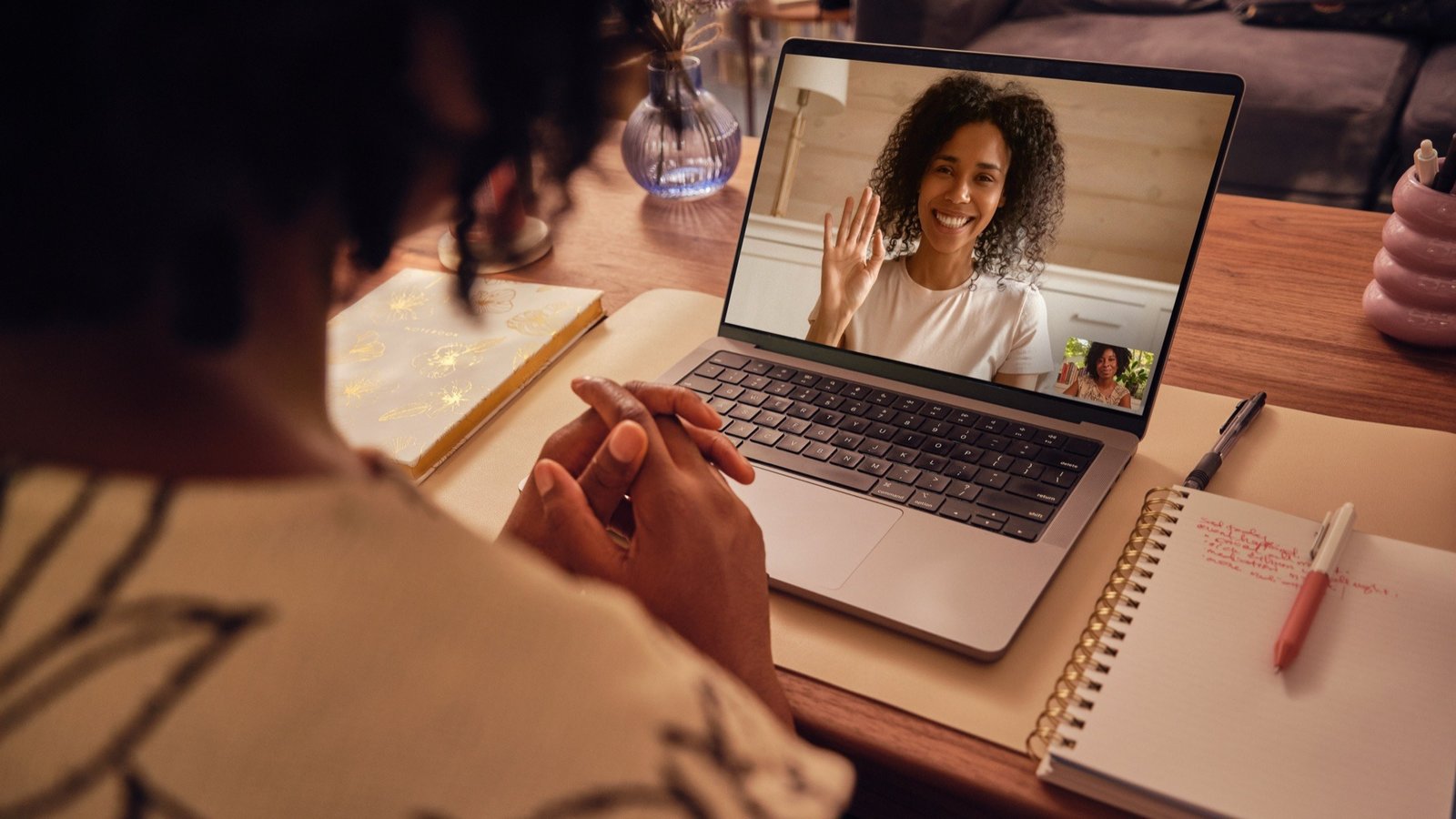
Teletherapy, also called virtual therapy, online counseling, or telehealth counseling, is mental health therapy delivered through a secure, HIPAA-compliant video platform instead of in person. You connect with your therapist from wherever you are — your home, your car during a lunch break, a private space at work — using a phone, tablet, or computer.
The session itself looks and functions very similarly to in-person therapy. You talk. Your therapist listens, asks questions, reflects, and works through clinical approaches with you in real time. The content of the conversation, the therapeutic techniques, and the relationship you build are the same. The setting is different.
Texas law defines audio-visual teletherapy as a synchronous, interactive, two-way audio and video communication that conforms to privacy requirements under HIPAA. In plain terms: what happens in your virtual session is private, protected, and legally held to the same standard as anything said in a therapist’s office.
What Does the Research Actually Say?
This is the question most people want answered before they commit. And the research gives a clear, evidence-based response.
A landmark 2024 systematic review and meta-analysis published in the Canadian Medical Association Journal analyzed randomized controlled trials comparing therapist-guided remote CBT to in-person CBT across a range of mental health conditions. The conclusion was unambiguous: there is little to no difference in the effectiveness of in-person versus remote CBT. Effect sizes, symptom reduction rates, and treatment completion all showed statistical equivalence across formats.
This is not a single isolated finding. A meta-analysis reviewing 20 randomized clinical trials found no significant difference between teletherapy and in-person therapy in treatment outcomes at post-treatment or follow-up, and no significant difference in attrition rates.
A 2025 systematic review comparing telemedicine and in-person interventions for anxiety disorders specifically found that telemedicine demonstrated non-inferior efficacy to in-person therapy across diverse modalities.
In short: for the most common conditions that bring people to therapy — anxiety, depression, PTSD, trauma, relationship difficulties, grief — the research consistently shows that teletherapy produces outcomes equivalent to in-person care. The medium changes. The healing does not have to.
Where In-Person Therapy Still Has an Edge
Honesty matters here. Research also shows there are some situations where the physical presence of a therapist carries additional value.
Some therapists experience more challenges in building rapport and interpreting non-verbal communication in teletherapy compared with in-person therapy. For clients who are processing very acute trauma, who are experiencing a psychiatric crisis, or who have limited access to a private, quiet space at home, in-person sessions may provide a more contained and therapeutically rich environment.
This is exactly why KBC offers both options. Some clients start virtually and transition to in-person as their needs deepen. Others come in for their first session and discover that virtual works perfectly for the long term. The right format is the one that helps you show up consistently.
Therapy in Texas: What You Need to Know
Texas has specific laws and protections governing telehealth services that make virtual therapy a well-regulated, legally sound option for residents across the state.
Privacy and HIPAA compliance are non-negotiable. HIPAA carries stiff penalties for providers, insurance carriers, and other entities who inappropriately share your information. That privacy is protected through all modes of telehealth treatment, whether by phone, text, or video conferencing. At KBC, all virtual sessions are conducted on a HIPAA-compliant platform. Your information is encrypted, protected, and never shared without your consent.
Texas law supports telehealth access. Texas law exempts mental health practitioners from several remote care requirements, most notably establishing a prior in-person relationship with the client. This effectively means that licensed mental health professionals can offer remote mental health services to patients through teletherapy regardless of whether they are an existing patient of the provider. In practical terms: you can begin therapy with KBC entirely virtually, without needing to come into the Arlington office first.
Insurance parity in Texas. Under Texas emergency rules, state-regulated health insurers and health maintenance organizations must pay in-network health professionals at least the same rate for telemedicine services as for in-person services, including covered mental health services. This means your insurance coverage for teletherapy sessions at KBC should mirror what it covers for in-person visits. Always confirm your specific plan’s teletherapy benefits, but Texas law is firmly on the side of equal access.
You must be physically located in Texas during your session. Your therapist’s license is issued by the state of Texas, which means you need to be within state lines when you attend your virtual session. If you are traveling out of state, contact us ahead of time to discuss your options.
Who Benefits Most from Teletherapy?
Teletherapy is not just a convenience feature. For many people, it is the difference between getting help and not getting it at all.
People with demanding or unpredictable schedules. Healthcare workers, teachers, parents of young children, shift workers, and professionals in high-pressure environments often cannot commit to appointments that require 30 to 60 minutes of commute on top of the session itself. Virtual therapy makes consistency far more achievable.
Clients in rural or suburban Texas. Many parts of the DFW metroplex — and certainly the broader state — have very limited access to culturally competent mental health providers. If you are in Mansfield, Cedar Hill, Burleson, Duncanville, or any surrounding community and want to work with a therapist who truly understands your experience as a Black Texan, virtual therapy at KBC brings that access to you directly.
People with physical disabilities or chronic illness. Leaving the house for every appointment can be genuinely exhausting or impossible for some clients. Teletherapy removes that barrier without sacrificing the quality of care.
Clients who feel safer processing at home. Some people, particularly those working through trauma, abuse, or shame-based experiences, find it easier to be vulnerable in a space that already feels safe and familiar. The home environment can actually support openness in a way a clinical office does not for everyone.
Clients managing stigma. In some communities, being seen walking into a therapist’s office is still a barrier to seeking care. Virtual therapy removes that concern entirely.
What to Expect from Your First Virtual Session at KBC
If you have never done teletherapy before, knowing what to expect removes a lot of the uncertainty.
Before your first session, you will receive a secure link to join the video call. No special software is needed — a smartphone, tablet, or computer with a camera and microphone will work. You will want to find a private space where you will not be interrupted and where you feel comfortable speaking openly.
Your first session at KBC is a getting-to-know-you conversation. Your therapist will ask about what brought you to therapy, what you have been experiencing, what your goals are, and any relevant history. There is no pressure to share everything at once. The therapeutic relationship builds over time, whether you meet virtually or in person.
From there, you and your therapist will establish a regular meeting cadence — typically weekly or biweekly — and begin working toward the goals you set together.
Can I Switch Between Virtual and In-Person at KBC?
Yes. Many of our clients move fluidly between both formats depending on what is happening in their lives. You might prefer to come in person during a particularly difficult period and shift to virtual when your schedule tightens. We build that flexibility in intentionally.
If you are in the Arlington area and want to start in person, our office is located at 3939 W Green Oaks Blvd, Suite 202, Arlington, TX 76016. If you are anywhere else in Texas, virtual sessions give you full access to KBC’s team of licensed therapists without the drive.
A Note for the Black Community in Texas
Finding a therapist who understands your experience — as a Black person, as someone navigating both personal and systemic stressors, as someone whose family may not have modeled help-seeking — is not a small thing. It is often the difference between therapy that works and therapy that misses the mark.
At KBC, our therapists are not just culturally aware. They are culturally grounded. And teletherapy means you do not have to be within driving distance of Arlington to access that. If you are in Dallas, Fort Worth, Houston, San Antonio, or any city or town across Texas, virtual therapy at KBC gives you access to a team that gets it.
Frequently Asked Questions
What is teletherapy and how does it work? Teletherapy is mental health counseling delivered via secure video call rather than in person. You meet with your licensed therapist in real time through a HIPAA-compliant platform using your phone, tablet, or computer. The session content, techniques, and therapeutic relationship are the same as in-person therapy — only the location is different.
Is teletherapy as effective as in-person therapy? Yes, for most people and most conditions. Multiple large-scale meta-analyses, including a 2024 review in the Canadian Medical Association Journal, found no statistically significant difference in outcomes between teletherapy and in-person therapy for anxiety, depression, trauma, and other common conditions. Teletherapy has proven equally effective in symptom reduction, treatment completion, and long-term follow-up outcomes.
Is teletherapy legal and private in Texas? Yes. Texas law explicitly supports teletherapy for mental health services. All sessions at KBC are conducted on a fully HIPAA-compliant video platform. Your privacy is legally protected under both Texas state law and federal HIPAA regulations. What you share in your virtual session stays between you and your therapist.
Does insurance cover teletherapy in Texas? In most cases, yes. Texas law requires that state-regulated health insurers reimburse for teletherapy at the same rate as in-person services. KBC accepts United Healthcare, Blue Cross Blue Shield, Cigna, Aetna, and other major insurers. Contact your insurance provider or us to confirm your specific telehealth benefits.
Do I need to have met my therapist in person before starting teletherapy in Texas? No. Texas law does not require an initial in-person visit before beginning teletherapy for mental health services. You can begin your care at KBC entirely virtually from your very first session.
Does KBC offer both virtual and in-person therapy? Yes. KBC serves clients in person at our Arlington, TX office at 3939 W Green Oaks Blvd, Suite 202, and virtually to clients anywhere in Texas through secure, HIPAA-compliant video sessions. Many clients use both formats depending on their needs and schedule.
How do I start teletherapy at KBC? Call us at 469-490-1442 or visit our contact page to schedule your first appointment. We will match you with a therapist whose specialties align with what you are working through, confirm your insurance coverage, and send you everything you need to join your first session. We are currently accepting new clients.
The Best Therapy Is the One You Can Actually Access
No format of therapy works if you cannot get to it consistently. Teletherapy removes the commute, the scheduling barrier, the geographic limitation, and sometimes the fear of being seen. It gives you the same quality of care — backed by the same research, delivered by the same licensed therapists — in the space where you feel most like yourself.
At Kenyatta Black Counseling, we offer virtual therapy sessions for individuals across Texas, alongside in-person counseling at our Arlington office. Whether you are working through trauma, anxiety, relationship difficulties, or just trying to understand yourself better, we are here — wherever you are.
We are currently accepting new clients. Call us at 469-490-1442 or schedule your appointment here.
Kenyatta Black, MA, LPC-S, is a Licensed Professional Counselor and Clinical Supervisor based in Arlington, Texas. KBC provides trauma-informed, culturally affirming individual and group counseling to adults in person and virtually across the state of Texas.
